
Xinyi Li b.sci.
2026
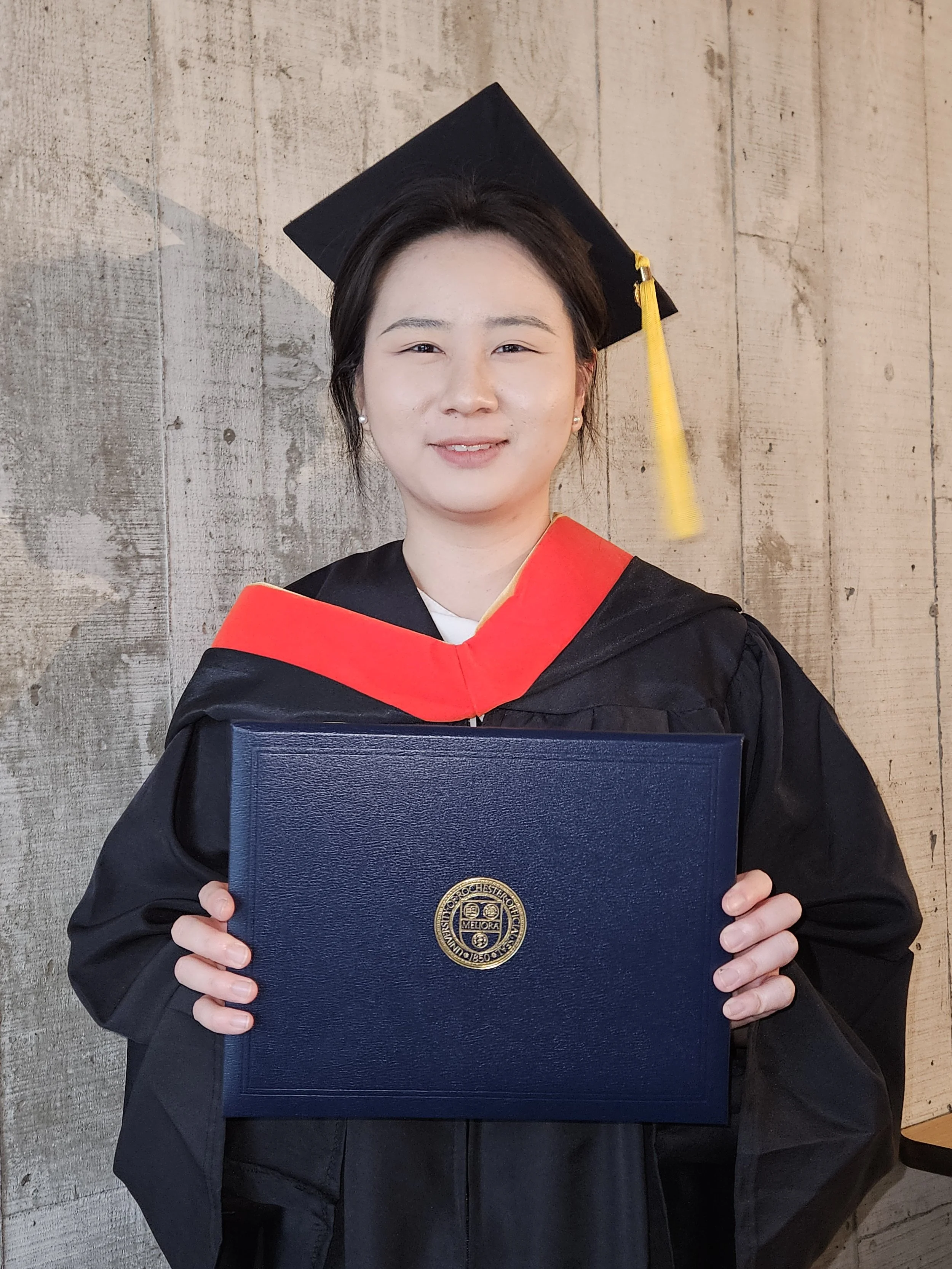
My name is Xinyi Li from Beijing, China. I earned a Bachelor of Science in Optical Engineering from the University of Rochester, with a minor in Electrical and Computer Engineering (ECE). I joined the Cardenas Lab during the second semester of my junior year, and that’s where my true journey into scientific research officially began.
I first time heard the concept of “optics” while applying to college in high school, which is how I learned about the University of Rochester’s renowned Institute of Optics. The reason I was so deeply drawn to optics and photonics is that, to me, optics is a branch of physics with a strong sense of “tangibility.” It offers a pathway for us to truly understand how the world works. On the other hand, photonics involves applying that understanding to create and build tangible objects. I applied to join the Cardenas Lab because this is not the kind of place that assigns undergraduates simple, menial tasks. Here, the resources and dedication the lab invests in undergraduates often far exceed the value we can currently provide in return.
Professor Cardenas and his team are genuinely committed to helping every student grow and progress. I was primarily involved in two projects in the lab. The first is the Automated Fiber-to-Chip Alignment System project. In this project, I participated in the development of a passive optical alignment system based on computer vision and deep learning technologies. I assisted in parameter tuning and performance testing of this AI-driven control system. Also, I ported the control program from a Windows workstation to an embedded development board, thereby enhancing the system’s operating speed and portability. The second is the Hands-On Photonic Education (HOPE) project. In this project, I used the HOPE experimental kits provided by AIM Photonics to test different photonic integrated circuit devices and hold workshops.
The research process in the Cardenas Lab was not always smooth sailing. Whether it was PICs or deep learning, most of the tasks I undertook were in fields I had never encountered before and almost entirely unfamiliar to me at the time. It often felt like playing a “single-player game.” Finding a research workflow that suited me was quite a challenge. Although I faced repeated failures and had to start over many times along the way, even the smallest success brought me joy. On the bright side, I learned to use a variety of software tools and gained a solid understanding of basic optical testing procedures. Most importantly, I learned how to take persistent action even in the face of uncertainty.
My favorite part of my time in the Cardenas Lab was the weekly group meetings, which included a Journal Club and presentations by PhD students sharing their research progress. I benefited greatly from these sessions, not only gaining specialized knowledge but also being exposed to a wide range of research approaches and methodologies. The group members got along very well, and the overall team atmosphere was filled with mutual support and encouragement. To be honest, I really can’t think of anything in this lab that I’m dissatisfied with or don’t like. For younger students interested in joining the lab, my advice is: don’t wait until you feel you’re “fully prepared” to take action. Because you’ll never feel “completely ready.” Just go ahead and submit your application, join the lab, and actively ask questions and engage with others.